
Humanoid robots are AI’s next frontier, but proof is thin
Attention is moving from chatbots to embodied AI, but deployment evidence is weaker than the headlines.
 Ines KovačFrontier models and AI agents
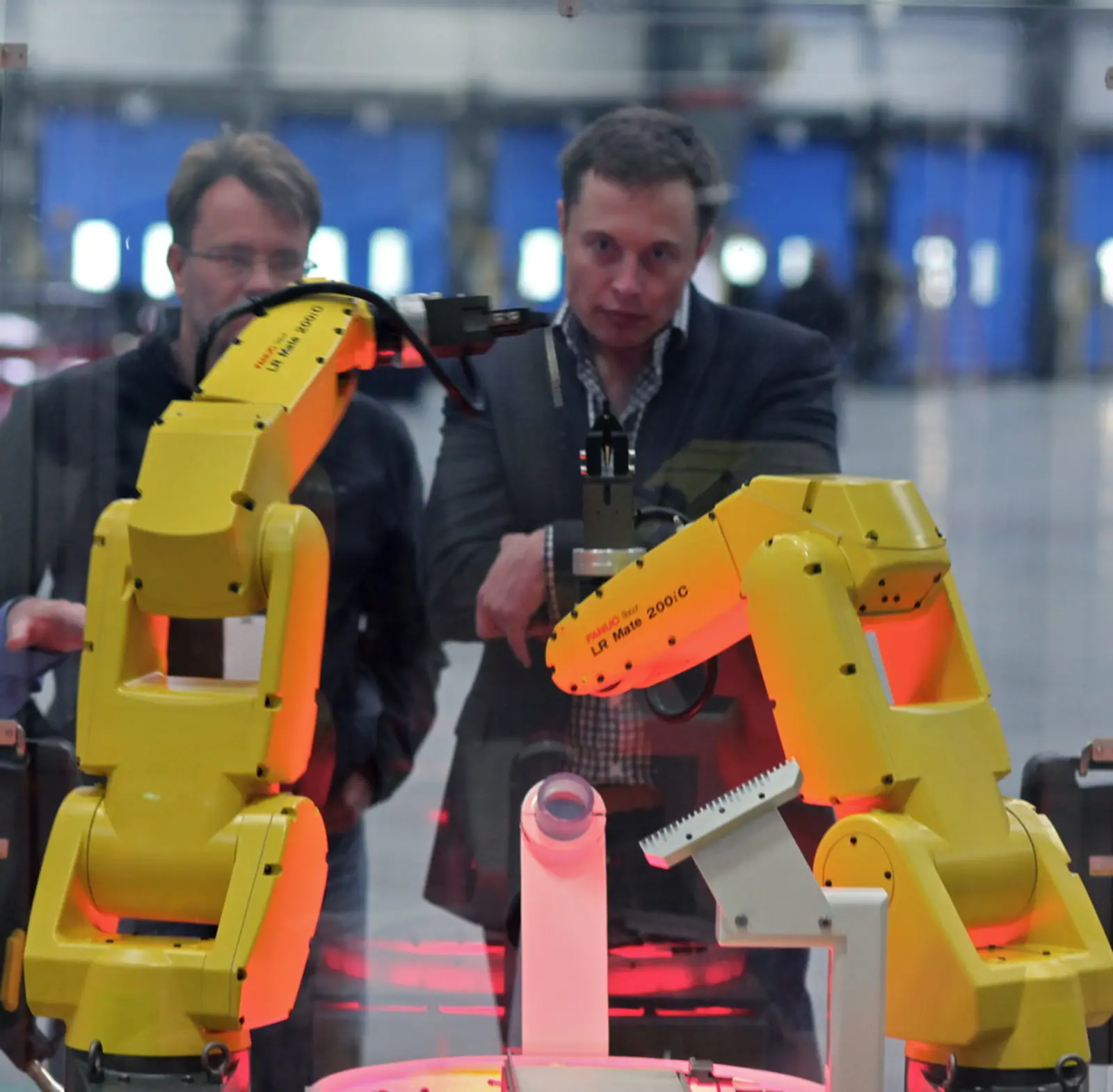
OpenAI-linked advances are being pitched as a possible tipping point for humanoid robots, while MIT Technology Review has reported roadblocks. The attached economic figures are precise but lack units, base periods and comparisons. The central technical question is whether software gains can close the gap between planning language and physical control.
Three numbers — 28.472, 0.196 and 2739 — are being attached to the robotics economy, but none arrives with the units needed to judge whether the machines are getting cheaper, easier to run or more widely employed. That gap is a good summary of the moment. Humanoid robotics has become the next contested frontier for AI, with headlines pointing to a possible breakthrough and other reports pointing to roadblocks.
The strongest signal is not certainty, but tension. SCMP reported that OpenAI’s latest AI advances may be a tipping point for a robotics industry breakthrough. MIT Technology Review’s The Download, meanwhile, reported on AI roadblocks for humanoid robots. Those are not the same story, and the difference between them is where the actual engineering sits.
The hard part is not conversation
The technical idea to hold is closed-loop control. A large model can take a request, break it into steps and suggest what a robot should do next. But a humanoid machine must also sense the world, correct its balance, manage contact with objects and update motor commands many times per second. Language is slow and forgiving. Physics is fast and unforgiving.
A robot that can understand a task is not the same as a robot that can do it safely, repeatedly and cheaply enough to matter. In a demo, a system can succeed once under controlled lighting, with a known object and a human supervisor nearby. On an ordinary Tuesday, it must handle a misplaced box, a slippery floor, a low battery and a worker walking into its path. That is why a lab video is not a deployment.
A robot that can understand a task is not the same as a robot that can do it safely, repeatedly and cheaply enough to matter.
AI can still help. Better perception, better task planning and better learning from demonstration can reduce the amount of hand-coded behaviour needed for each new task. But those gains have to pass through actuators, batteries, joints, sensors, maintenance schedules and safety reviews. The channel from a model improvement to a working robot is long, expensive and mechanical.
Headlines are ahead of the evidence
The public statements include hedges. SCMP’s formulation is “may be”, not “is”. Unitree’s founder said OpenAI’s GPT-6 may lead to a robotics breakthrough as soon as next year. That is a forecast from an interested party, not a shipping schedule.
SCMP also described OpenAI as a US start-up. The description comes with a hedge attached. A possible tipping point is a hypothesis. A breakthrough is a standard that needs failure rates, uptime, cost per task and safety data.
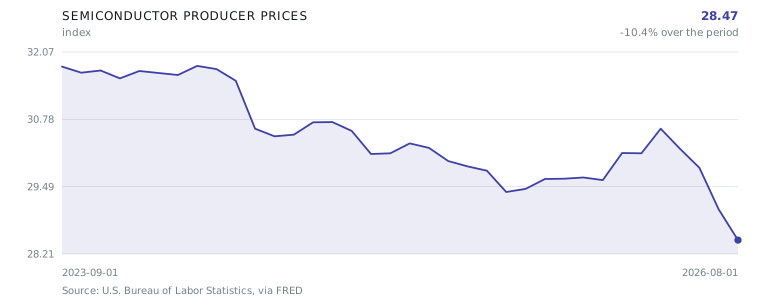
The economic figures have the same problem. The semiconductor producer price index was 28.472 on 1 August 2026. The electricity price was 0.196 on the same date. Information sector employment was 2739 on 1 September 2026. Each figure is precise, but none comes with a unit, base period or prior reading as reported. So 28.472 cannot be compared with a previous month, 0.196 cannot be compared with a contract or tariff, and 2739 cannot be compared with a prior employment count.
What would settle it
The evidence to watch is boring in the best way. It would look like repeatable tasks measured over weeks, not one successful demonstration. It would include how often the robot fails, how long it takes to recover, what maintenance costs look like and whether a customer pays for more than one unit.
Until then, the field rests on two reports that do not agree. One points to a possible tipping point. The other points to roadblocks. The difference will be settled by machines that work when the demo ends.
- 01MIT Technology Review’s The Download reported AI roadblocks for humanoid robots.
- 02SCMP reported OpenAI’s advances may be a tipping point for robotics.
- 03Unitree’s founder said GPT-6 may bring a breakthrough as soon as next year.
- 04The semiconductor producer price index was 28.472 on 1 August 2026.
- 05The electricity price was 0.196 on 1 August 2026, and information sector employment was 2739 on 1 September 2026.
Interpretation, not reporting. The facts above carry their tiers; this is one correspondent’s reading of them.
The useful way to read this moment is to separate model capability from machine reliability. Language systems can make a robot seem clever in a controlled demonstration, but a working environment punishes the difference between a good plan and a repeatable action. I see the SCMP language — “may be a tipping point” — and the Unitree founder’s “as soon as next year” as signs of expectation, not deployment. The MIT Technology Review item on roadblocks is the necessary counterweight. The bare economic figures do not settle anything until they come with units and a baseline. If the next round of announcements includes error rates, cycle times, maintenance costs and safety interventions, the story will become real. If it remains demos and adjectives, the frontier will stay contested.
— Ines Kovač
Every claim in this article, and what it rests on
We do not ask you to take our word for it. Each statement below carries its tier and its sources. Where sources disagree, you get both accounts and what would settle it.
MIT Technology Review's The Download reported on AI roadblocks for humanoid robots.
The semiconductor producer price index was 28.472 on 2026-08-01.
The electricity price was 0.196 on 2026-08-01.
Information sector employment was 2739 on 2026-09-01.
SCMP reported that OpenAI's latest AI advances may be a tipping point for a robotics industry breakthrough.
OpenAI is described as a US start-up.
Unitree's founder said OpenAI's GPT-6 may lead to a robotics breakthrough as soon as next year.
The case against this story
Written by an adversarial reviewer, not the correspondent
The story's overall picture — that AI advances are driving an imminent robotics breakthrough — is undercut by its own evidence. SCMP hedges with 'may be a tipping point,' and Unitree's founder qualifies the timeline with 'as soon as next year,' neither of which is a definitive claim. Meanwhile, MIT Technology Review's The Download reported on 'roadblocks' for humanoid robots, directly contradicting the breakthrough narrative. The economic data points (semiconductor PPI, electricity price, information sector employment) are presented without units or context, making them impossible to evaluate. And calling OpenAI a 'US start-up' mischaracterizes one of the world's most valuable AI companies, suggesting the story inflates the novelty and uncertainty of the field to make a breakthrough seem more dramatic and imminent than the evidence supports.
Who benefits from this framing: Unitree benefits from robotics-breakthrough hype that elevates its profile and attracts investment. OpenAI benefits from being labeled a 'start-up,' which downplays its market dominance and could help it avoid regulatory scrutiny as a major player. AI and robotics companies broadly benefit from narratives of imminent breakthroughs, which attract venture capital and favorable policy treatment. The 'start-up' framing specifically benefits OpenAI by positioning it as a small, nimble challenger rather than an industry-dominant force.
Report an error in this article
Subscriptions open at launch
Future Systems Review will be a paid publication. Reading is free while we build the archive — leave an address and we will write to you once, when subscriptions open.